Even a mild toothache can be a distraction. In the worst cases, your tooth pain may be so severe that you can’t function normally. Pain is an indication from your body that something is not right and may be a sign of an underlying condition.
What Causes a Toothache?
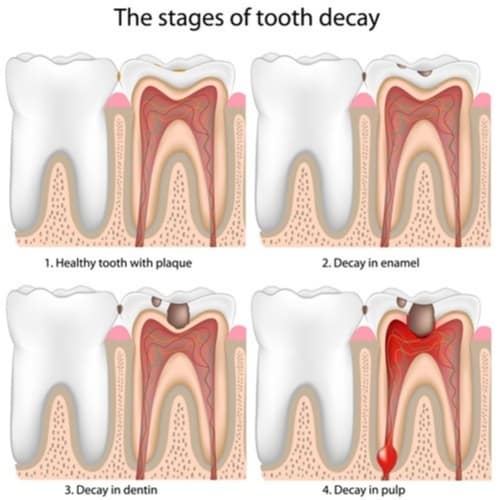
A toothache can have many potential causes. Tooth decay is a common reason. The diagram below shows the different stages of decay. At first it may only affect the outer layer of your tooth, called the enamel. As it progresses, it will start to move into the dentin (below the enamel) and eventually the pulp. The pulp is the inner part of your tooth which is made up of connective tissue and when decay reaches this level, extensive dental work is often required.
A toothache may also be caused by other conditions such as an abscessed tooth. This is when the pulp becomes infected and pus forms a pocket around the root. An abscess will not get better on its own and avoiding treatment can have serious consequences. Toothaches can also be caused by gum disease, infected gums, a damaged filling, teeth grinding (bruxism), or a tooth fracture.
Why You Shouldn’t Ignore Tooth Pain
You may be tempted to ignore issues with your teeth in hopes that they will go away on their own. Many people try to ignore the pain because they do not want to have to visit a dentist. However, ignoring a toothache can lead to much more serious problems. The risk of gum infection or an infection from an abscessed tooth is particularly serious. These infections can spread from your tooth into your jaw and then to other parts of your body through your bloodstream.
If you have a high fever, rapid heart rate, confusion, and/or difficulty swallowing, you should go to the emergency room as these could indicate a serious infection requiring immediate medical treatment.
What to Do Until You Get to the Dentist
Until you are able to see the dentist, you may want to get some temporary relief from your toothache pain. Over-the-counter pain medication such as acetaminophen, ibuprofen, or aspirin can be helpful, as can using a cold compress on your jaw. A saltwater rinse is also one of the best home remedies. Use half a teaspoon of salt with 8 ounces of warm water and swish this around in your mouth for a minimum of 30 seconds
How We Can Help
While we can usually help reduce your pain and start treatment during your first appointment, many oral health conditions require continued care. This is especially true if you have a more serious issue, such as extensive tooth decay. During your visit, we will discuss our recommendations for follow-up care.
It is also important that you practice good oral hygiene to prevent new or worsening dental issues. This includes brushing twice a day and flossing once a day.
Follow-Up Treatments
While we can usually help reduce your pain and start treatment during your first appointment, many oral health conditions require continued care. This is especially true if you have a more serious issue, such as extensive tooth decay. During your visit, we will discuss our recommendations for follow-up care.
It is also important that you practice good oral hygiene to prevent new or worsening dental issues. This includes brushing twice a day and flossing once a day.